If you are searching for non-CDL trucks for sale in Florida, TruckMax offers commercial truck options for businesses, owner-operators, contractors, delivery companies, landscapers, and other buyers across the state. A properly configured non-CDL truck can give your business the capacity it needs while making it easier to put qualified drivers behind the wheel.
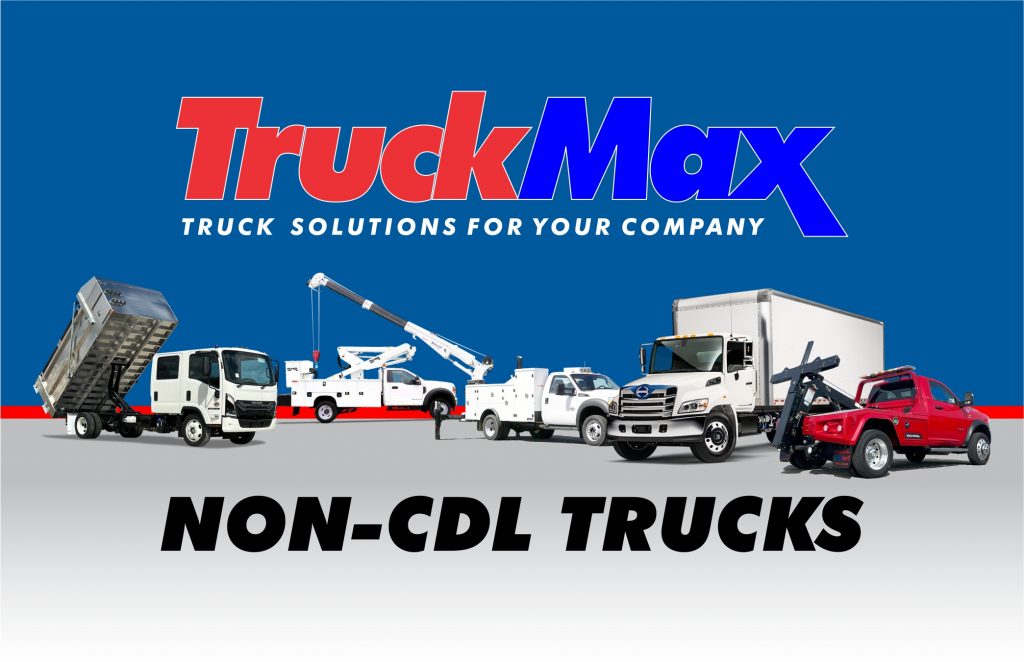
Non-CDL commercial trucks are available in many configurations. These include box trucks, landscape trucks, flatbeds, refrigerated trucks, dump trucks, service trucks, tow trucks, and other work trucks.
TruckMax can help you compare truck size, GVWR, body configuration, payload needs, and application to find the right truck for your operation.
What Is a Non-CDL Commercial Truck?
A non-CDL truck is a commercial vehicle that can be operated without a Commercial Driver’s License when the vehicle and its use fall outside the CDL requirements established by applicable regulations.
For many commercial truck buyers, 26,000 pounds GVWR or less is an important number. However, GVWR alone does not determine whether a CDL is required.
Trailer and combination weight ratings can matter. Passenger capacity, hazardous materials, and the way the vehicle is used can also affect CDL requirements.
For this reason, buyers should consider the complete vehicle and application instead of assuming that every truck at or below a certain GVWR is automatically a non-CDL truck.
Why Are Non-CDL Trucks So Popular?
For many Florida businesses, a non-CDL commercial truck offers an attractive balance between capability and ease of operation.
One of the biggest advantages is access to a larger pool of potential drivers. A company may not need to hire a CDL driver for a truck that does not require one for its specific configuration and use.
As a result, non-CDL trucks can be especially attractive to small businesses, growing fleets, contractors, delivery companies, landscaping businesses, rental operations, and owner-operators.
They can also provide substantial commercial capability without moving into a heavier truck class than the business actually needs.
Non-CDL Medium-Duty Trucks for Florida Businesses
Medium-duty trucks are an important part of the commercial vehicle market. They can provide more capacity and durability than many light-duty vehicles while remaining practical for local and regional business operations.
Depending on the configuration, many buyers specifically seek non-CDL medium-duty trucks with a GVWR that allows the vehicle to perform demanding commercial work without requiring a CDL based on vehicle weight alone.
These trucks are commonly used for delivery, landscaping, construction, towing, refrigerated transportation, equipment service, hauling, and many other applications.
TruckMax helps buyers compare chassis, body configurations, GVWR, payload capacity, and intended use before choosing a commercial truck.
Types of Non-CDL Trucks for Sale in Florida
One of the biggest advantages of the non-CDL commercial truck market is variety. Businesses can find work trucks designed for very different jobs while staying within configurations that may not require a CDL.
Non-CDL Box Trucks
Non-CDL box trucks are popular with delivery companies, moving businesses, furniture companies, retailers, contractors, and logistics operations.
A box truck provides enclosed cargo space while remaining practical for local deliveries and urban environments.
For businesses making frequent stops throughout Miami, Fort Lauderdale, West Palm Beach, Naples, Tampa, Orlando, Jacksonville, or other Florida markets, a properly sized non-CDL box truck can be an efficient solution.
Non-CDL Landscape Trucks
Florida’s year-round landscaping industry creates strong demand for non-CDL landscape trucks.
Landscape companies need trucks capable of transporting equipment, tools, materials, debris, and crews. However, many businesses also want trucks that can be assigned to qualified employees without requiring every driver to hold a CDL.
The right chassis and landscape body configuration can provide an effective balance between capacity and ease of operation.
Non-CDL Dump Trucks
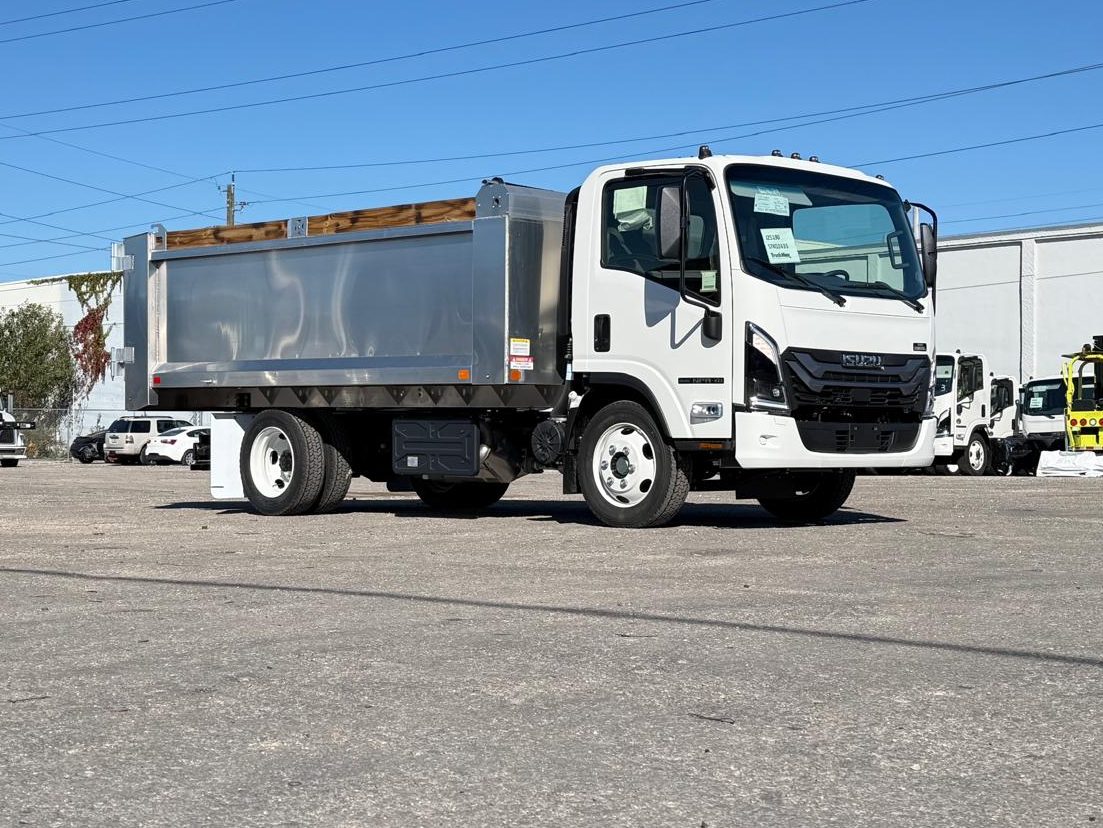
Some non-CDL dump truck configurations can provide contractors, landscapers, property maintenance companies, and other businesses with useful hauling capability.
Truck configuration is especially important with dump trucks because the body, equipment, payload, and vehicle ratings all need to work together.
The goal is not simply to stay within a certain GVWR. The truck also needs enough legal payload capacity to perform the intended job effectively.
Non-CDL Flatbed Trucks
Flatbeds are among the most versatile commercial trucks.
A non-CDL flatbed truck can be useful for construction companies, building suppliers, landscapers, equipment businesses, contractors, and delivery operations.
Different bed lengths, chassis configurations, equipment, and payload requirements make proper truck selection important.
Non-CDL Refrigerated Trucks
Florida businesses that transport food, beverages, flowers, produce, pharmaceuticals, and other temperature-sensitive products may benefit from non-CDL refrigerated trucks.
A refrigerated body adds equipment and weight to the vehicle. Therefore, buyers need to consider the complete truck configuration when evaluating GVWR and available payload.
TruckMax can help buyers find refrigerated commercial trucks suited to their transportation needs.
Non-CDL Service and Utility Trucks
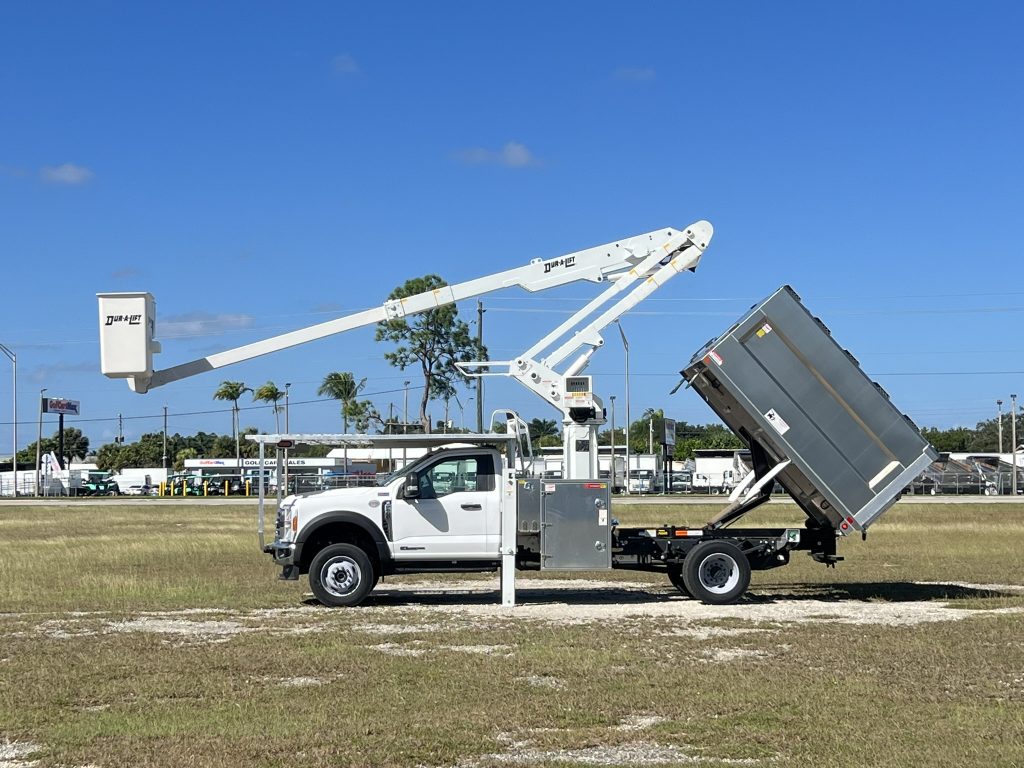
Contractors, mobile mechanics, maintenance companies, construction businesses, utilities, and field-service operations often need trucks that bring tools and equipment directly to the jobsite.
A non-CDL service truck can provide storage and commercial capability while remaining practical for daily use.
Body weight, equipment, tools, and payload should all be considered when selecting the right chassis.
Non-CDL Tow Trucks
Some towing applications may be possible with trucks configured within non-CDL parameters. However, towing requires special attention because the vehicle being transported or towed can affect combination ratings and licensing requirements.
For that reason, buyers looking for a non-CDL tow truck should evaluate the entire towing application rather than relying only on the tow truck’s GVWR.
TruckMax’s experience with commercial trucks and towing equipment can help customers identify appropriate options for their operations.
Isuzu Non-CDL Trucks
Isuzu Trucks are widely used in commercial applications throughout Florida.
Their cab-over design, maneuverability, visibility, and range of vocational configurations make Isuzu trucks popular for box trucks, landscape trucks, refrigerated trucks, flatbeds, dump trucks, and other work applications.
TruckMax is an official Isuzu Trucks dealer, giving customers access to Isuzu commercial truck options along with parts, service, and commercial truck support.
Depending on model and configuration, buyers can explore Isuzu trucks suited to applications where a CDL may not be required.
Hino Non-CDL and Medium-Duty Trucks
Hino Trucks are another established name in the commercial vehicle market.
TruckMax is an official Hino Trucks dealer and supports customers looking for medium-duty truck solutions for delivery, vocational, and business applications.
When considering a Hino truck for a non-CDL application, customers should evaluate the specific model, GVWR, body, payload requirements, and how the truck will be used.
New Non-CDL Trucks for Sale in Florida
Buying a new commercial truck gives businesses the opportunity to choose a vehicle and body configuration suited to their specific operation.
A properly configured new truck can help a company avoid buying more truck than it needs, or choosing a truck that does not provide enough capacity for the job.
TruckMax offers new commercial truck solutions for businesses throughout Florida and can help customers evaluate available non-CDL options based on their intended application.
Used Non-CDL Trucks for Sale in Florida
For businesses looking to control acquisition costs or add a truck quickly, a used non-CDL truck can be an excellent option.
TruckMax offers used commercial trucks across multiple body styles and applications.
When shopping for a used truck, buyers should verify the vehicle’s GVWR, configuration, body, equipment, condition, and intended use. A truck that worked well for one business may not necessarily be the right truck for another.
26,000 GVWR Trucks: Why This Number Matters
The 26,000-pound GVWR range receives a lot of attention from commercial truck buyers because federal CDL requirements generally use a 26,001-pound threshold for certain vehicle classes.
However, buyers should not treat “26,000 GVWR” and “non-CDL” as interchangeable terms.
A truck’s GVWR is only one part of the equation.
For example, towing a trailer can bring Gross Combination Weight Rating (GCWR) and trailer ratings into consideration. Passenger transportation and hazardous-material operations can also trigger CDL requirements under circumstances unrelated to the truck’s basic GVWR.
That is why choosing the right commercial truck requires looking at how the entire vehicle will be configured and used.
Payload Matters Just as Much as GVWR
There is another reason not to choose a truck based only on the words “non-CDL.”
Payload matters.
The truck needs enough capacity for the body, equipment, cargo, tools, driver, passengers, and everything else it will carry.
A truck configured to remain within a desired weight rating but without enough usable payload may not be the right business solution.
TruckMax can help customers consider both the licensing objective and the actual work the truck needs to perform.
Who Should Consider a Non-CDL Truck?
Non-CDL commercial trucks can be attractive for many Florida businesses, including:
- Delivery companies
- Landscaping businesses
- Contractors
- Construction companies
- Moving companies
- Food and beverage distributors
- Refrigerated delivery operations
- Retail businesses
- Equipment companies
- Property maintenance companies
- Service businesses
- Towing operations
- Municipal and institutional fleets
- Owner-operators
- Businesses adding their first commercial truck
The right configuration depends on the job.
Why Buy a Non-CDL Truck from TruckMax?
Buying a commercial truck involves more than finding a vehicle with the right number on the door sticker.
The truck needs to fit your business.
TruckMax specializes in commercial trucks and vocational applications. Customers can compare different chassis, body types, weight ratings, payload needs, and work applications with help from a team that understands commercial vehicles.
TruckMax is also an official dealer for leading commercial vehicle and equipment brands, including Isuzu Trucks, Hino Trucks, Volvo Trucks, Jerr-Dan Wreckers, Cummins engines, Allison Transmission, and Battle Motors trucks.
In addition, TruckMax provides parts and service support to help commercial truck owners keep their vehicles working.
Non-CDL Trucks for Sale Across Florida
TruckMax serves commercial truck buyers throughout Florida.
Whether you are looking for a non-CDL truck in Miami, Fort Lauderdale, West Palm Beach, Homestead, the Florida Keys, Naples, Fort Myers, Tampa, Orlando, Jacksonville, or another Florida community, TruckMax can help you explore commercial truck options for your business.
Florida businesses operate in very different industries and environments. Therefore, the best non-CDL truck is not necessarily the same for every buyer.
The right truck is the one that meets the needs of your business while complying with the licensing and operating requirements that apply to your specific use.
Find Non-CDL Trucks for Sale in Florida at TruckMax
If you are searching for non-CDL trucks for sale in Florida, start with the work the truck needs to perform.
Consider the body type, payload, GVWR, cargo, equipment, towing requirements, and who will operate the vehicle. Then choose a truck that brings those requirements together.
TruckMax can help you explore new and used commercial trucks and identify options that fit your business.
Find your next commercial truck at TruckMax and put the right truck to work for your business.
CDL requirements depend on vehicle configuration, GVWR, GCWR, trailer ratings, passenger capacity, hazardous-material transportation, vehicle use, and applicable laws and regulations. Always verify the licensing requirements that apply to your specific vehicle and operation.